




How to Power Starlink Off-Grid with Sunslice LinkPower Energy Solutions: A Technical Guide
Starlink has transformed remote connectivity by making high-speed satellite Internet available in locations where fixed telecom infrastructure is limited, unreliable or completely unavailable. From humanitarian operations and emergency response to telecom deployments, field engineering, expeditions and mobile teams, Starlink can provide a critical communication link far beyond the electrical grid.
However, reliable connectivity also requires reliable power. A Starlink terminal that cannot be powered is of little use in the field, and simply carrying a large battery is not always enough. The complete system must also be easy to transport, protected during deployment, compatible with the antenna, rechargeable in remote environments and adapted to the required operating time.
This is exactly why Sunslice developed the LinkPower range: a family of portable energy and transport solutions designed around satellite communication equipment such as Starlink Mini, Starlink Standard and Starlink Performance.
1. How Much Power Does a Starlink Antenna Need?
The first step in selecting an off-grid power solution is understanding the energy consumption of the Starlink terminal you intend to use.
- Starlink Mini: average power consumption is typically around 25 to 40W.
- Starlink Standard: average power consumption is typically around 75 to 100W.
- Starlink Performance: average power consumption is typically around 75 to 100W.
Actual consumption can vary depending on network activity, temperature, environmental conditions and features such as snow melting. For this reason, autonomy figures should always be considered estimates rather than fixed operating times.
The power architecture is also different depending on the Starlink model. Starlink Mini accepts DC power and is particularly well suited to compact battery-based systems. When powered through USB-C Power Delivery with a compatible USB-C-to-barrel cable, the power source must be capable of delivering sufficient USB-C PD power. Larger Starlink systems are generally better suited to higher-capacity battery systems with AC or dedicated DC power outputs.
2. The Sunslice LinkPower Range: Choosing the Right Starlink Power Solution
Rather than offering a single universal battery, the LinkPower range is designed around different deployment scenarios. The right solution depends on four main factors: the Starlink antenna being used, the required autonomy, the importance of portability and the level of integration required in the field.
2.1 LinkPower Mini Flight Case: Compact and Configurable Power for Starlink Mini
The LinkPower Mini Flight Case is the most compact rugged-case solution in the range for Starlink Mini. It is designed for teams that need to transport, protect and power a Starlink Mini in a single organized field case without moving to a large power station.
The system can be configured according to the mission:
- Case only, for users who already own their power equipment.
- Up to 3 × 100Wh batteries, providing approximately 3 hours of estimated autonomy per battery.
- Up to 2 × 60W solar panels for field recharging and extended deployments.
A fully configured system can therefore provide up to approximately 9 hours of battery autonomy before accounting for additional solar energy generated during deployment. The modular architecture also makes it possible to carry only the amount of battery and solar capacity required for the mission.
This is an excellent solution for humanitarian teams, emergency responders, defense units, telecom technicians and mobile crews that need a rugged Starlink Mini kit that remains compact and easy to transport.
See the LinkPower Mini Flight Case
2.2 LinkPower Backpack: Maximum Mobility for Starlink Mini
When mobility on foot is more important than flight-case protection, the LinkPower Backpack provides a highly portable alternative.
The hard-shell backpack is designed to organize an entire mobile connectivity setup, with dedicated space for a Starlink Mini, up to four 100Wh power banks, up to two Fusion 60 solar panels and a laptop up to 17 inches.
Battery configurations can be adapted to the mission:
- 1 × 100Wh battery: approximately 3 hours of estimated autonomy.
- 2 × 100Wh batteries: approximately 6 hours.
- 3 × 100Wh batteries: approximately 9 hours.
- 4 × 100Wh batteries: approximately 12 hours.
The backpack can also be configured with one or two 60W solar panels. This makes it particularly attractive for field teams that move frequently and need to carry their communications, energy and computing equipment together.
The system uses a modular, manually connected architecture rather than permanently integrated internal wiring. This keeps the setup flexible, serviceable and easy to adapt in the field.
See the LinkPower Backpack for Starlink Mini
2.3 LinkPower Pro Flight Case: Starlink Mini with a High-Capacity Power Station
For longer deployments or missions that require more than a compact power bank, the LinkPower Pro Flight Case combines the mobility of Starlink Mini with the capacity and versatility of a portable power station.
The case is designed to accommodate:
- A Starlink Mini antenna.
- A Gravity 512 portable power station.
- Up to 2 × Fusion 60 solar panels.
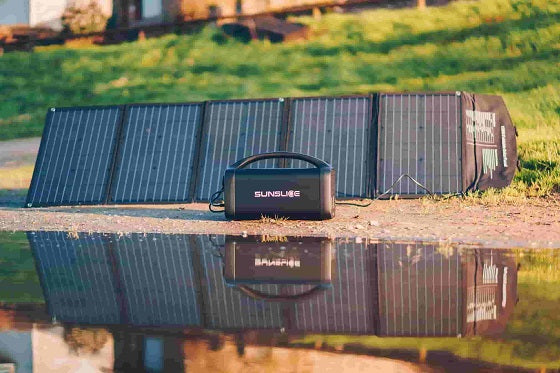
External AC outputs and a solar input are accessible without opening the case, allowing the power station to remain protected while the system is operating. This makes the LinkPower Pro especially useful for semi-permanent field installations, command posts, telecom teams, emergency operations and remote work sites where Starlink is only one of several devices that need power.
The Gravity 512 also allows the system to power other AC and DC equipment such as laptops, radios, lighting, networking equipment and charging stations. Compared with a power-bank-based Starlink Mini setup, the LinkPower Pro is heavier but substantially more versatile.
See the LinkPower Pro Flight Case
2.4 LinkPower Energy Flight Case: Integrated Power for Starlink Standard, Performance and Professional SATCOM
The LinkPower Energy Flight Case is the most integrated professional energy system in the LinkPower range.
Unlike the smaller LinkPower Mini solutions, this system is designed for more power-demanding satellite terminals, including Starlink Standard, Starlink Performance and Starlink Flat High Performance, as well as selected Intellian OneWeb terminals.
The system integrates the energy architecture directly into the rugged flight case:
- 1024Wh LiFePO₄ battery, with customizable capacity options.
- 500W pure sine wave inverter, customizable depending on project requirements.
- 2 external AC outlets.
- Solar and AC charging.
- Bluetooth and Wi-Fi battery monitoring through app, web portal or fleet-management tools.
For Starlink Flat High Performance applications, the standard configuration is specified for approximately 8 hours of autonomy, although real operating time will depend on antenna load and environmental conditions.
This solution is particularly well suited to professional deployments where connectivity is mission-critical and where the power system itself must be integrated, protected and monitored. Typical applications include humanitarian communications, telecom infrastructure, defense operations, industrial sites and remote command posts.
The system can also be customized. A deeper case configuration is available for projects requiring additional room for solar panels, routers, networking equipment or server hardware.
See the LinkPower Energy Flight Case
2.5 LinkPower Compact: Transport and Power Integration for Starlink Performance Gen 3
The LinkPower Compact is designed specifically around the Starlink Performance Gen 3 ecosystem.
Its purpose is to keep the complete Starlink Performance installation organized and protected in one transport solution, with space for the antenna, Starlink Gen 3 router, Starlink Advanced Power Supply and the required accessories.
This makes it a particularly relevant solution for technicians, mobile installations and professional teams that regularly transport and redeploy a Starlink Performance system.
Depending on the project, the system can also be configured with an integrated power-bank option to increase operational independence. For deployments where power autonomy is as important as transport protection, Sunslice can adapt the configuration to the required mission profile.
See the LinkPower Compact for Starlink Performance Gen 3
3. Powering Starlink Mini Directly from a Portable Battery
Starlink Mini is particularly efficient for off-grid deployments because of its relatively low power consumption and DC input architecture.
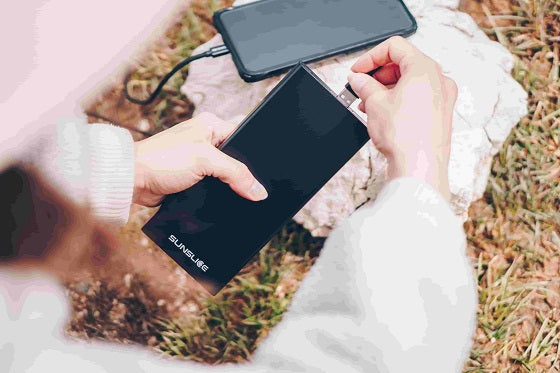
For users who do not require a complete LinkPower case or backpack, the Gravity 27 Extreme Pro provides a compact 99.9Wh battery with up to 100W USB-C Power Delivery, MPPT solar charging and pass-through functionality.
A suitable connection cable is required between the USB-C PD battery and the Starlink Mini DC input. Sunslice offers a dedicated USB-C to Starlink DC5521 cable for compatible setups.
This direct battery approach is useful when minimum weight and volume are the priorities. The same architecture is used as the basis for the modular battery configurations available in the LinkPower Mini and LinkPower Backpack.
4. Solar Power for Starlink: Why the Fusion 60 Is Central to the LinkPower Range
Battery capacity determines how long a Starlink system can operate without being recharged. Solar power determines how long that autonomy can be extended when no electrical grid is available.
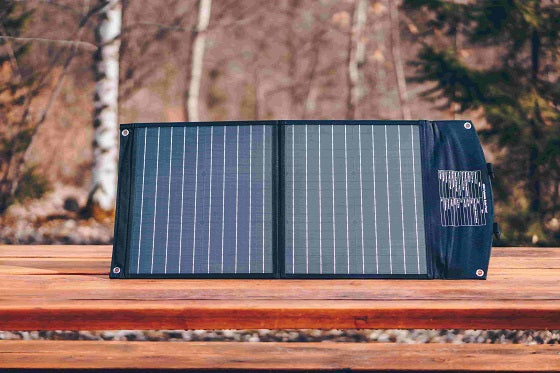
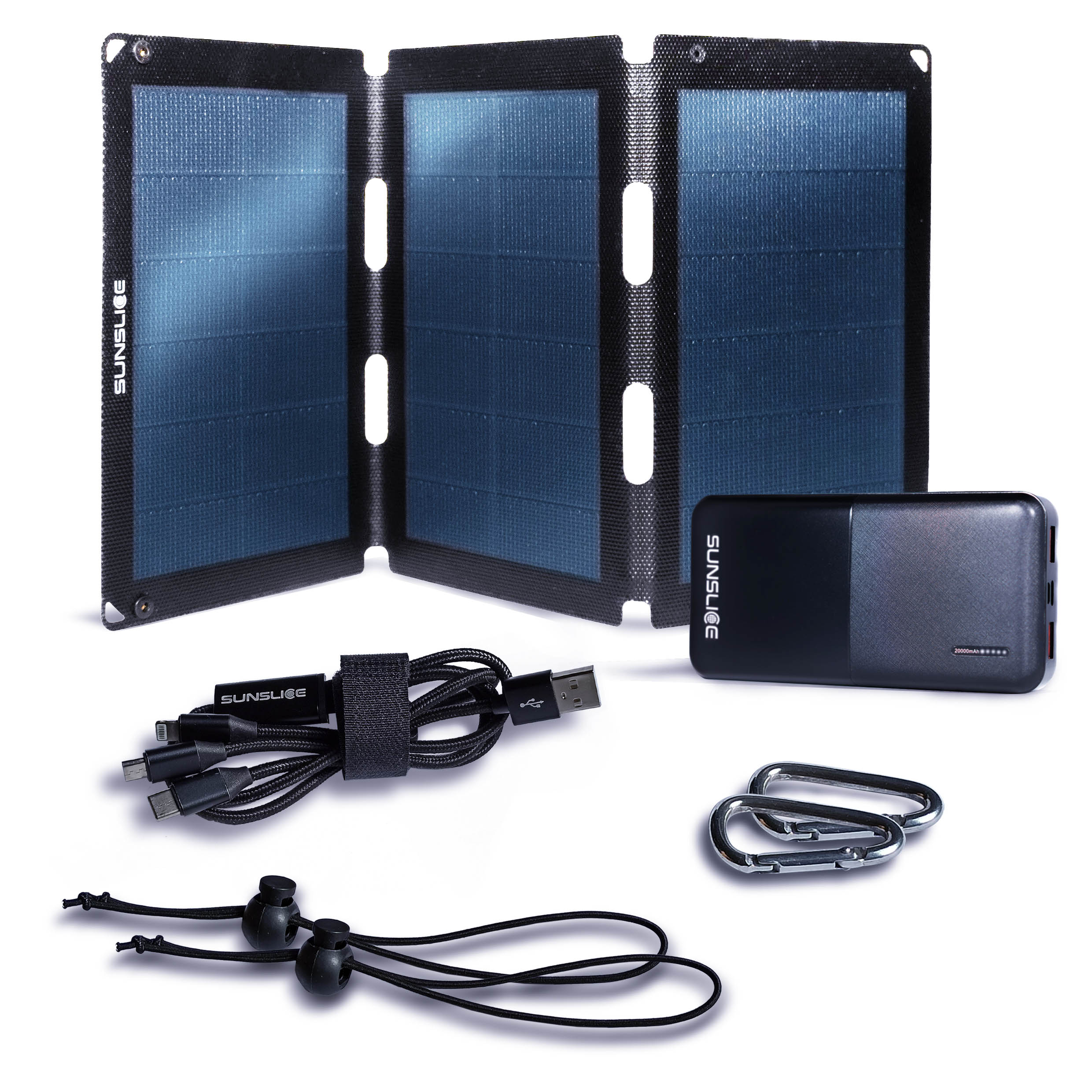
The Fusion 60 is the main compact solar panel used throughout the portable LinkPower range. It provides up to 60W of solar power in a foldable 1.2kg format and includes USB-A, USB-C PD and DC5521 outputs.
Its 60W DC output makes it suitable for charging compatible batteries and energy systems in the field, while its foldable format allows one or two panels to be stored directly inside several LinkPower configurations.
One Fusion 60 provides a compact solar-recharging solution. Two panels increase available solar generation and are more appropriate for extended missions, especially when the system is used for several hours every day.
Solar autonomy, however, should always be planned conservatively. A 60W-rated panel will not continuously produce 60W throughout the day. Cloud cover, panel orientation, temperature, shadows and the time of day all affect production. For critical deployments, it is therefore advisable to size the battery system so that the mission can continue through periods of reduced sunlight.
5. Which LinkPower System Should You Choose?
For the lightest mobile Starlink Mini deployment
Choose the LinkPower Backpack when the system needs to be carried on foot and deployed rapidly. It provides the highest battery capacity of the compact 100Wh-battery configurations, with space for up to four batteries and two Fusion 60 panels.
For a rugged and compact Starlink Mini flight case
Choose the LinkPower Mini Flight Case when equipment protection and compact transport are the priorities. Its configurable battery and solar options allow the case to be adapted to short or extended field operations.
For Starlink Mini plus additional AC-powered equipment
Choose the LinkPower Pro Flight Case. The Gravity 512 power station provides significantly more stored energy and allows the same system to power Starlink alongside other AC and DC equipment.
For Starlink Standard, Starlink Performance or professional SATCOM terminals
Choose the LinkPower Energy Flight Case. Its integrated 1024Wh LiFePO₄ battery, inverter, external outputs, solar charging and remote monitoring make it the most complete solution for long-duration and mission-critical field connectivity.
For transporting and deploying Starlink Performance Gen 3
Choose the LinkPower Compact. It is purpose-built around the Performance Gen 3 antenna, router, Advanced Power Supply and accessories, with optional power integration depending on the deployment.
6. Recommendations for Reliable Off-Grid Starlink Operation
- Plan autonomy with a safety margin. Battery capacity divided by average antenna consumption gives only a theoretical estimate. Conversion losses, temperature and changing Starlink power consumption reduce real-world runtime.
- Use direct DC power when appropriate. For compact Starlink Mini systems, direct DC or USB-C PD power can reduce the conversion losses associated with running an AC inverter.
- Match solar power to daily energy consumption. A solar panel must not only recharge the battery; it must generate enough energy during available daylight to compensate for the energy consumed by Starlink.
- Protect the complete system. In professional field operations, batteries, cables, routers and antennas all need to remain organized and protected during transport. This is one of the main advantages of the LinkPower approach over carrying separate components.
- Consider redundancy for critical communications. Multiple battery modules, solar charging and alternative AC charging sources can significantly improve operational resilience.
- Choose a customizable system for complex deployments. Telecom, defense, humanitarian and industrial projects often require specific connectors, autonomy, monitoring or storage configurations. The LinkPower Energy and professional flight-case solutions can be adapted to project requirements.
Conclusion: One LinkPower Solution for Every Starlink Deployment
There is no single ideal power solution for every Starlink installation. A field worker carrying a Starlink Mini on foot has very different requirements from a telecom team operating Starlink Performance at a remote site for several days.
The Sunslice LinkPower range was developed around these different use cases:
- LinkPower Backpack for maximum mobility.
- LinkPower Mini Flight Case for compact, rugged Starlink Mini deployments.
- LinkPower Pro Flight Case for Starlink Mini combined with a high-capacity power station.
- LinkPower Energy Flight Case for integrated professional power and satellite communication systems.
- LinkPower Compact for Starlink Performance Gen 3 transport and deployment.
By combining portable batteries, solar generation, rugged transport and field-ready power distribution, LinkPower systems make it easier to deploy reliable satellite connectivity wherever access to the grid is limited or unavailable.
For humanitarian, defense, telecom, industrial or custom SATCOM projects, visit the complete LinkPower range or contact Sunslice to discuss a configuration adapted to your mission.